-.png?w=292&h=156)
How to replace shock absorbers & springs?
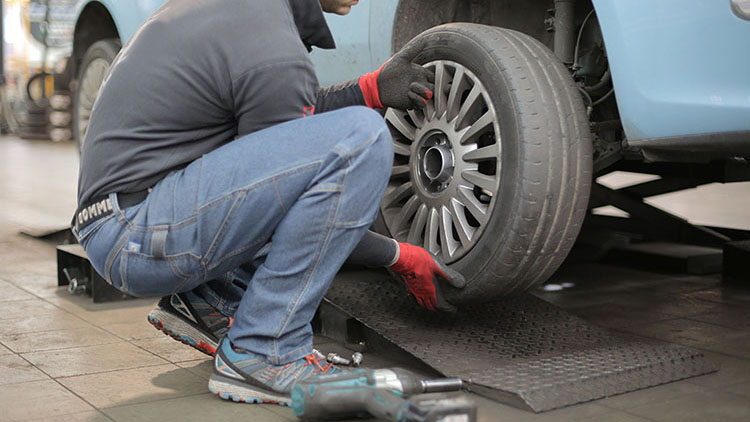
As we all know, shock absorbers wear slowly. You do not notice the driving quality gradually deteriorating for a long time. Sooner or later the moment arrives when you can no longer ignore the spongy steering: a clear signal of worn shock absorbers. Not only is this uncomfortable but also dangerous. Read here everything you need to know about the replacement of shock absorbers.
What does a shock absorber do?
During bumpy driving, the shock absorber absorbs the movement of the wheels and transmits them to the body in a damping and delayed manner. This makes driving more comfortable and safer. The car maintains its track while driving and does not make sudden turns.

Nowadays it is hard to imagine how uncomfortable transport has been in the era of coaches. Not only were streets everything but smooth and even like they are now.
Identifying a defective shock absorber
- Vibration while driving
- Turning or diving while braking
- Braking takes more time to stop the car
- Uneven tire wear
- Leakage fluid
- The bushing at the connection point is broken
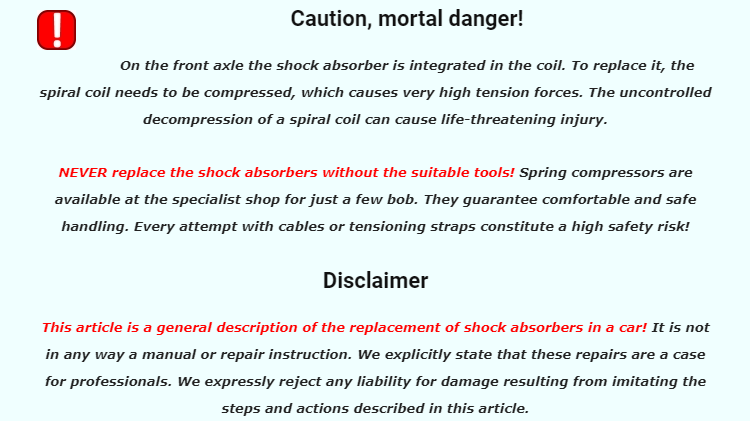
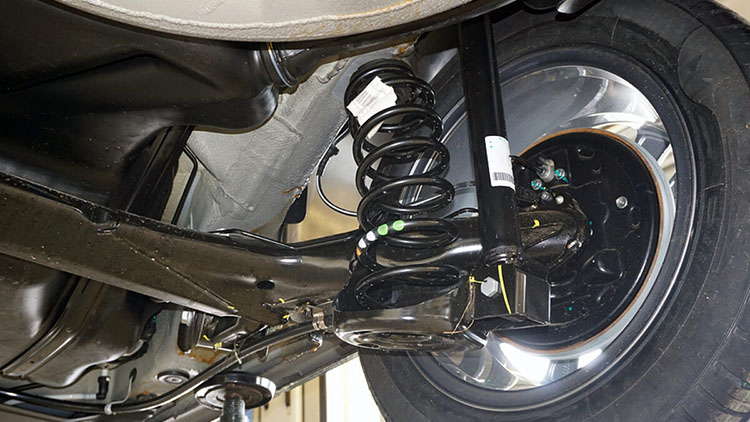
Recommendations for replacing the shock absorber on the rear axle
(This procedure should only be followed if suspension struts are not installed on the rear axle as a unit.)
Replacing shock absorbers on the rear axle is relatively simple. The spring and damping units are often installed separately. The car should be sufficiently jacked up until there is no pressure on the rear axle, the wheels are hanging free. Remove the wheels to unscrew the shock absorbers.
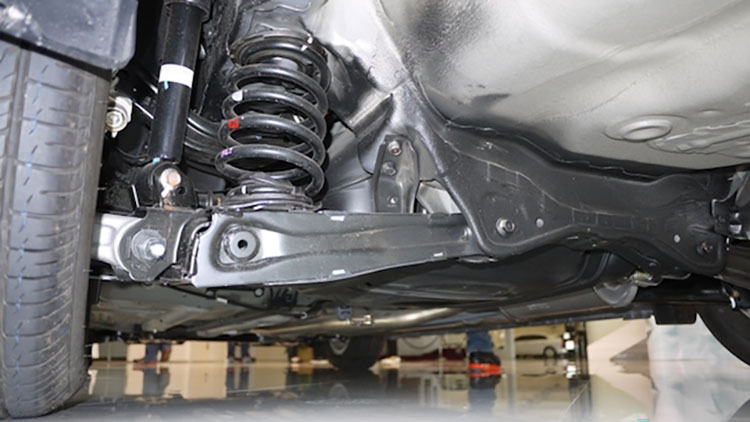
Recommendations for replacing the shock absorber on the front axle
The front axle is generally equipped with suspension struts in which the damping unit is integrated within the spiral coil. Removing them is somewhat more complicated.
Installation Steps
1. Jack up the car
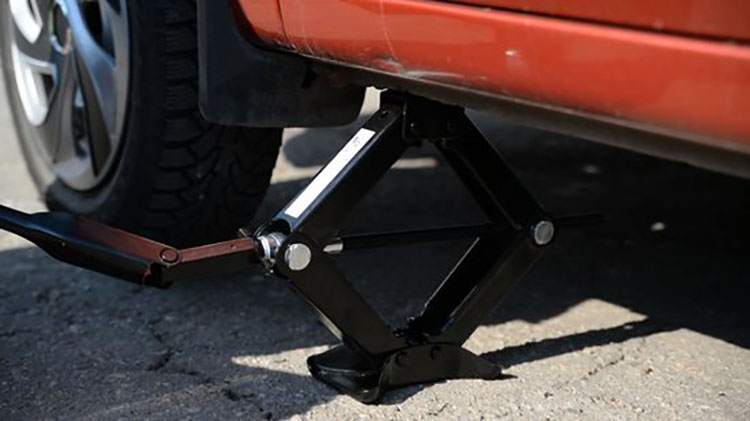
Prior to jacking up: loosen the wheel nuts
To safely work on the car it should be in a secure position. The special safety stands are most suitable. Blocks of wood, bricks, or a single hydraulic jack constitute a considerable risk of an accident. Always use suitable tools.
The car should always be hoisted on the provided contact points. Faulty positioned jacks can cause severe damage to the bodywork.
2. Dismounting wheels

Before jacking up, loosen the wheel nuts.
3. Remove the old shock absorbers
- Some cars have top bolts located under the lining in their trunk. Lift up that fabric to reach the shock bolts and remove them using a socket and ratchet. Grease the bolts with penetrating fluid to remove any rust from the surface and turn the ratchet and socket counterclockwise to remove them.
- Use a nut splitter to disconnect the suspension from the nut and remove it from the bolt. If you are not able to operate the splitter, apply some penetrating solvent in the area.
- Some cars also have a knuckle on the top of their brake assembly, which you also need to disengage before you can reach the shock.
- One challenge you might face is that the piston rod also turns as you loosen the nut. You may use locking pliers at the rod’s end to prevent it from turning and then loosen the nut using a wrench. If the nuts are too jammed to open up, spray some metal cleaner to let them loosen up and then try again.
The shock absorber is mounted on the wheel suspension with two bolts. If these are too tight, a bit of penetrating oil (e.g. WD-40) can help here.
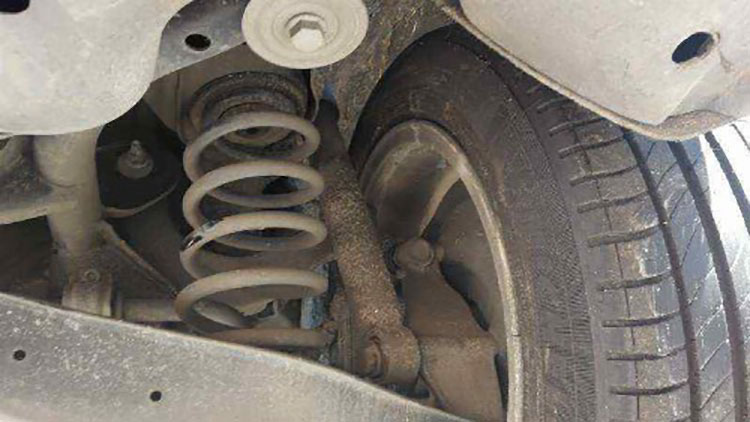
4. Install new shock absorbers
- Affix the new shock absorbers back onto the suspension control system. Apply some pressure to fix the shock in place. Lift up the suspension so that the bolts which need to be reinstalled find their correct positions. Since this process needs some balancing, it would be better to get help from another person.
- Screw the nuts on with your hands as tight as possible.
If you removed the anti-roll bar before, it’s time to fix it back. Reattach the anti-roll bar and screw up the bolts with your hands first. Replace the shower tower nuts that you removed before. You must have found them in the trunk of your car. - Refer to your car’s service manual to check the right torque specifications. Before you tighten and finalize everything, recheck your torque specs and ensure that all parts are safe and secure.
- Repeat all the above steps if you want to replace other shock absorbers in your vehicle as well. Most often, all four shock absorbers wear out evenly and at the same time. So, if you are replacing one, you should probably do them all. After replacing all the shock absorbers, but the tires back, tighten the lugs and finish up the job.
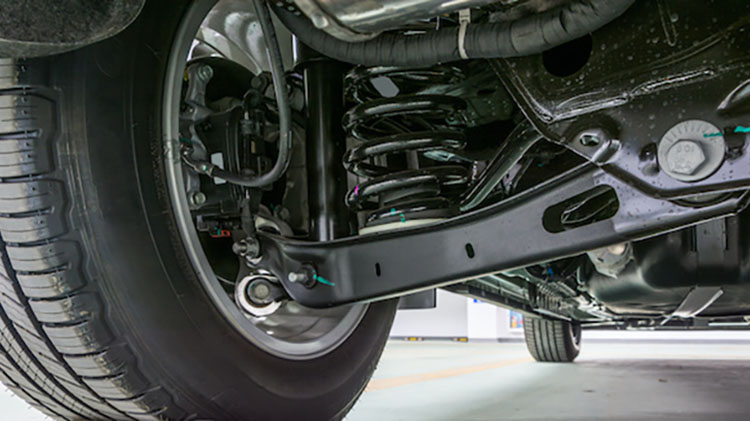
5. Further repairs
Principally, all front axle components are always replaced in pairs. This applies to brakes, steering knuckles, ball joints, and tie rods. As these components have to be disassembled or removed in case of shock absorber replacement anyway, they should be profoundly checked prior to assembly. If the components approach their wear limit, this is an excellent occasion for preventive replacement.
By all means, take a look at the inner and outer axle sleeves. If they are torn or porous, they are up for replacement as well. This specifically applies if grease is leaking out. This means a bit more work.

Bring you a comfortable driving experience!