-.png?w=292&h=156)
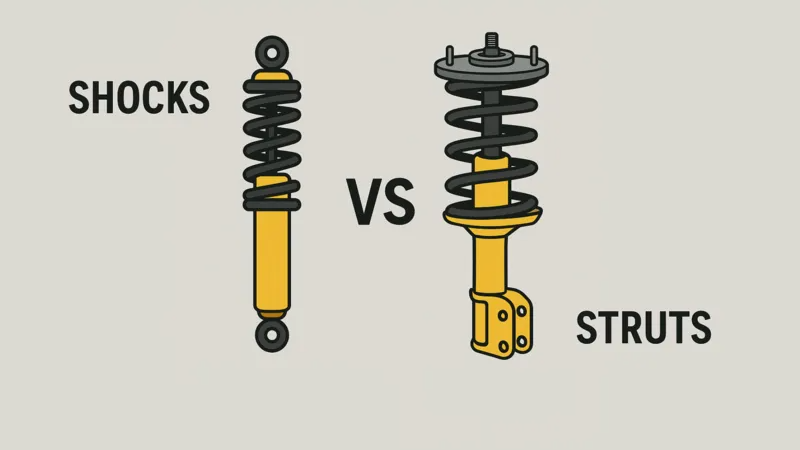
Shock Absorbers vs Struts: What’s the Difference?
Introduction
If you're researching your vehicle’s suspension system, you’ve probably come across the terms shock absorbers and struts.
Many drivers assume they are the same, but they actually serve different functions and are designed differently.
Understanding the difference between shocks and struts can help you:
- Diagnose suspension issues
- Choose the correct replacement parts
- Maintain your vehicle properly
In this guide, we’ll break down shock vs strut differences, how they work, and how to identify which one your vehicle uses.
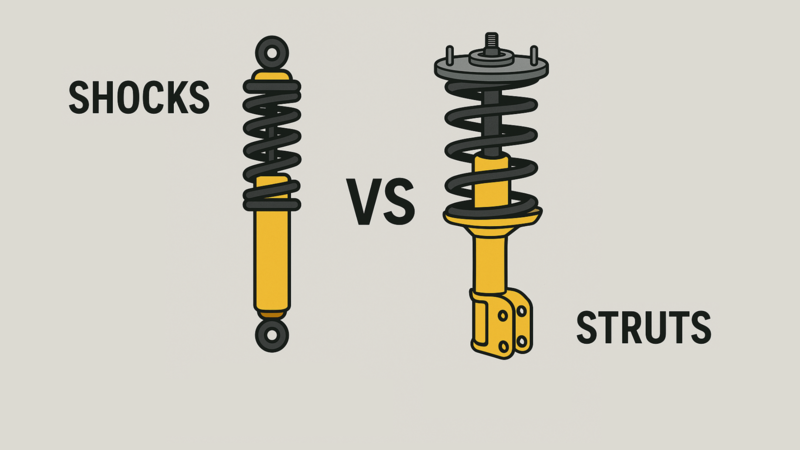
What Are Shock Absorbers?
Shock absorbers are components designed to control the movement of your vehicle’s suspension.
They do not support the weight of the vehicle. Instead, they:
- Absorb and dampen road impact
- Reduce bouncing
- Keep tires in contact with the road
Shock absorbers are usually found in:
- Trucks
- SUVs
- Some older vehicle designs
What Are Struts?
Struts are a structural part of the suspension system.
Unlike shocks, struts:
- Support the weight of the vehicle
- Combine multiple components into one unit
- Affect alignment and steering
Struts typically include:
- Shock absorber
- Coil spring
- Mounting components
They are commonly used in:
- Modern passenger cars
- Front suspension systems
Key Differences Between Shocks and Struts
1. Function
- Shock absorbers: Control movement and reduce bounce
- Struts: Provide structural support and damping
2. Design
- Shocks: Separate component
- Struts: Integrated assembly (spring + shock)
3. Cost
- Shocks: Generally cheaper
- Struts: More expensive due to complex design
4. Replacement Complexity
- Shocks: Easier to replace
- Struts: More labor-intensive
Replacing struts often requires additional work such as alignment.
5. Impact on Vehicle
- Shocks: Affect comfort and stability
- Struts: Affect comfort, stability, and alignment
How to Know If Your Car Has Shocks or Struts
Most vehicles have either shocks or struts in the front suspension, and sometimes shocks in the rear.
Common Indicators
- Struts are usually mounted vertically with a coil spring
- Shocks are smaller and mounted separately
Check Your Vehicle
To be sure:
- Check your owner’s manual
- Look under the vehicle
- Contact a specialist with your VIN
Can You Replace Shocks with Struts?
No—shock absorbers and struts are not interchangeable.
They are designed differently and serve different roles in the suspension system.
You must always replace them with the correct type for your vehicle.
Signs You Need to Replace Shocks or Struts
Regardless of type, worn suspension components show similar symptoms:
- Excessive bouncing
- Clunking noise
- Uneven tire wear
- Poor handling
- Fluid leaks
If you notice these signs, it may be time to replace your shocks or struts.
Which Is Better: Shocks or Struts?
Neither is “better”—they are simply designed for different systems.
- Shocks → simpler, more flexible
- Struts → integrated, space-saving design
The best option is always the one designed for your specific vehicle.
Final Thoughts
Understanding the difference between shock absorbers and struts helps you make better decisions when maintaining your vehicle.
While both serve to improve ride comfort and stability, they have different designs and functions.
👉 If you’re unsure whether your vehicle uses shocks or struts, contact us with your VIN and we’ll help confirm the correct parts. Email us at info@luft-meister.com.
FAQ
Are shocks and struts the same thing?
No. Shocks control suspension movement, while struts are structural components that also support the vehicle.
Which is more expensive: shocks or struts?
Struts are generally more expensive because they combine multiple components into one unit.
Do all cars have struts?
No. Some vehicles use shocks, some use struts, and some use both depending on the suspension design.