-.png?w=292&h=156)
Introduction
If you own a Cadillac Escalade, GMC Yukon, or Chevrolet Tahoe/Suburban, you know these flagship vehicles are renowned for their pillowy, luxurious ride quality. Much of that comfort comes down to General Motors’ advanced Magnetic Ride Control (MRC) and rear air leveling suspension systems.
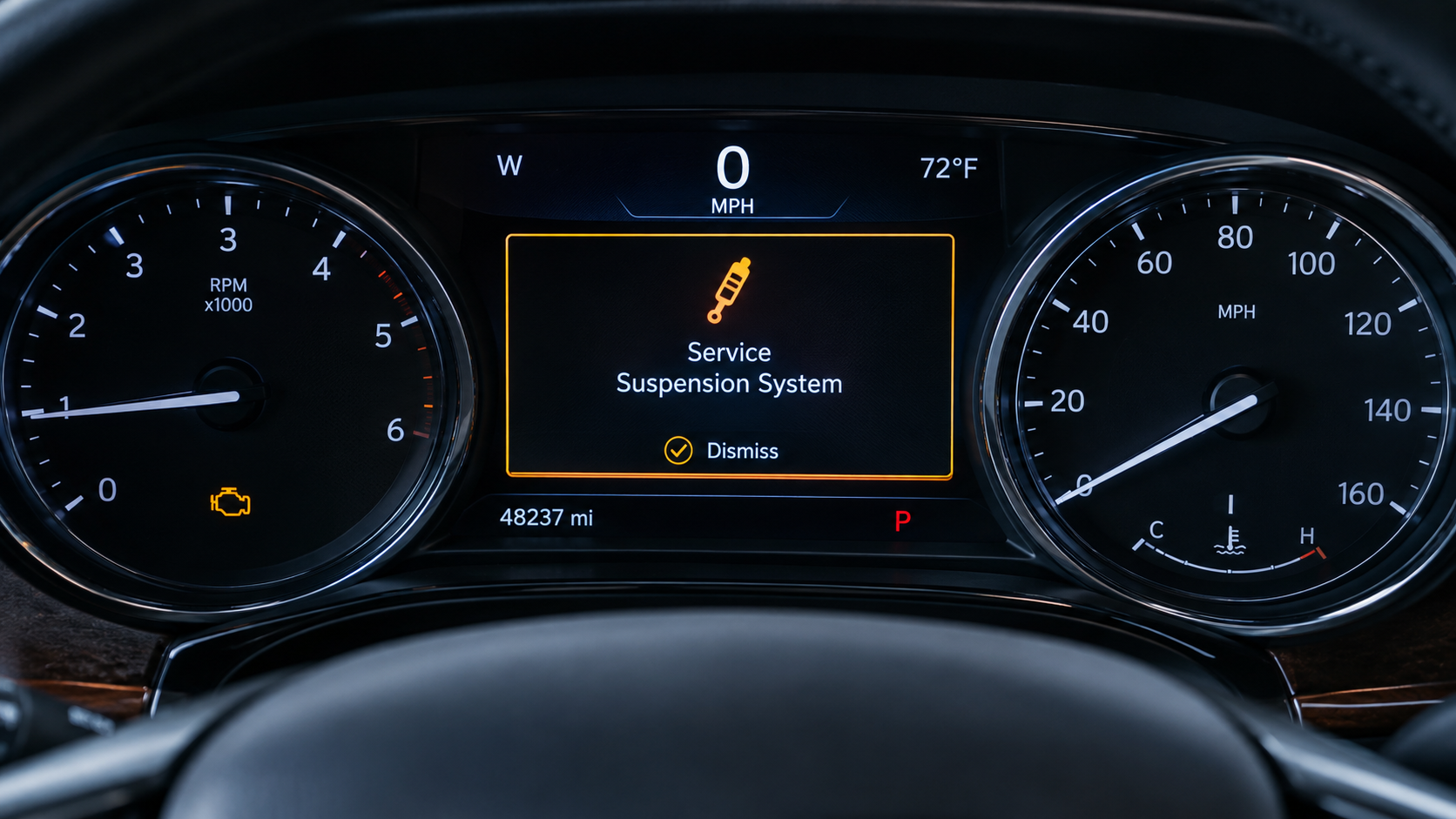
However, seeing the dreaded "Service Suspension System" message illuminate on your driver information center can quickly ruin your driving experience. In many cases, this warning is accompanied by specific Chassis Diagnostic Trouble Codes (DTCs), a harsh ride, vehicle sagging, or even an automatic speed restriction (such as top speed limited to 80 mph).
In this comprehensive guide, we will break down the exact diagnostic fault codes, why this warning light appears, and the most cost-effective ways to fix it.
Common GM Suspension DTCs (Fault Codes Breakdown)
When the Suspension Control Module (SCM) detects a component failure, it logs a specific "C-code" (Chassis code). Scanning your vehicle with an OBD-II scanner capable of reading chassis modules will typically reveal one of the following codes:
-
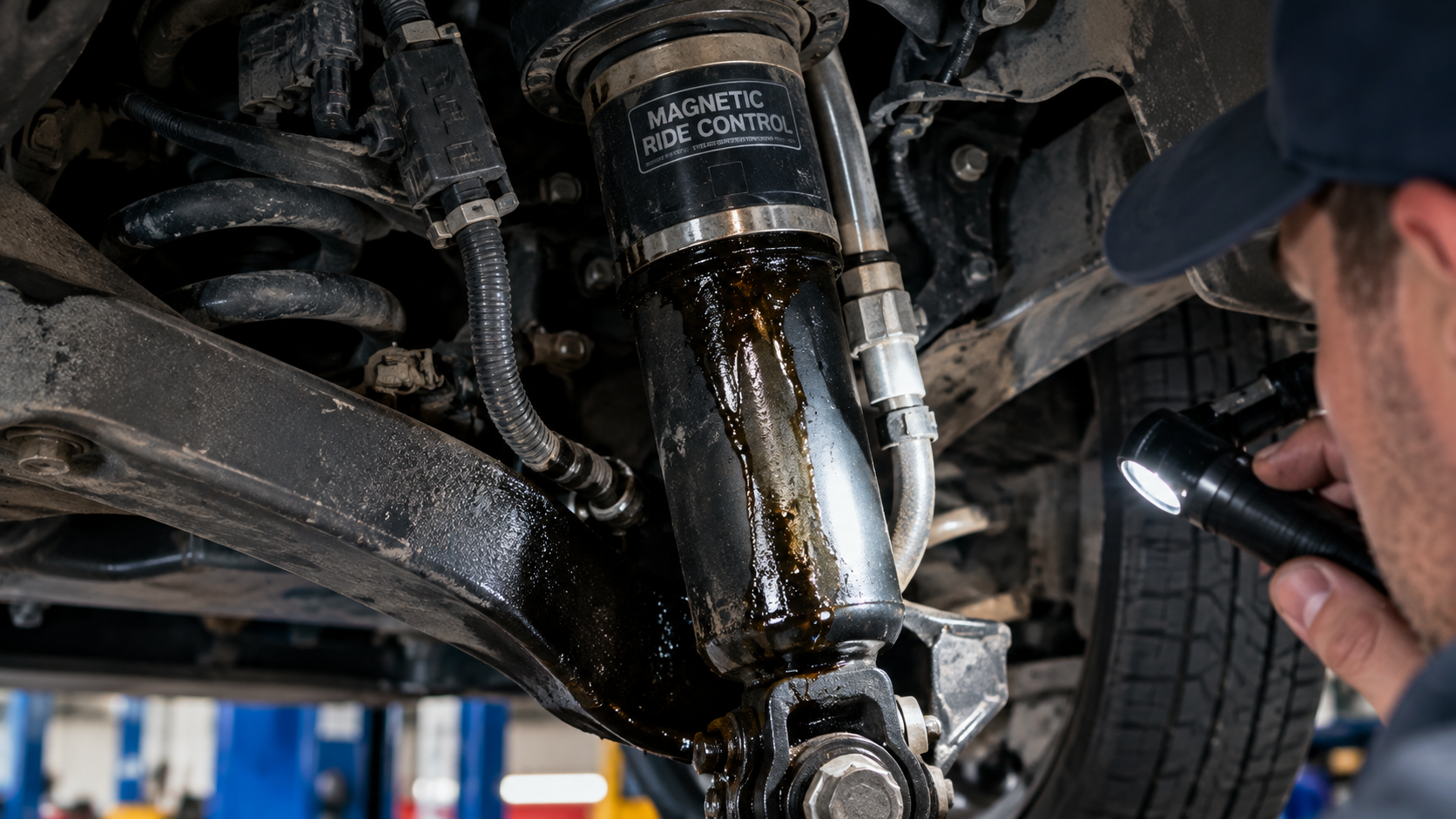
C0575 / C0580 / C0585 / C0590 (Left Front / Right Front / Left Rear / Right Rear Solenoid Circuit Open/Malformed)
-
Meaning: The electronic damping coil inside the specified Magnetic Ride shock has suffered an internal open circuit, short, or severe fluid leakage.
-
-
C0680 (Rear Air Spring Solenoid / Height Control Circuit Failure)
-
Meaning: The module cannot control or communicate with the rear air leveling valves or height solenoid.
-
-
C0660 (Level Control Exhaust Valve Circuit Malfunction)
-
Meaning: The exhaust valve on the rear air suspension compressor is stuck, preventing the vehicle from lowering back to normal ride height.
-
-
C0710 (Steering Angle Sensor Signal Invalid)
-
Meaning: The chassis control system is receiving conflicting steering inputs, disabling real-time electronic damping adjustments.
-
Step-by-Step Troubleshooting Guide
Follow these steps to pinpoint the exact failure point before spending money on unnecessary replacement parts:
How to Fix the Issue: Direct-Fit Replacement Options
Once you have identified the source of the fault code, you have two primary options:
-
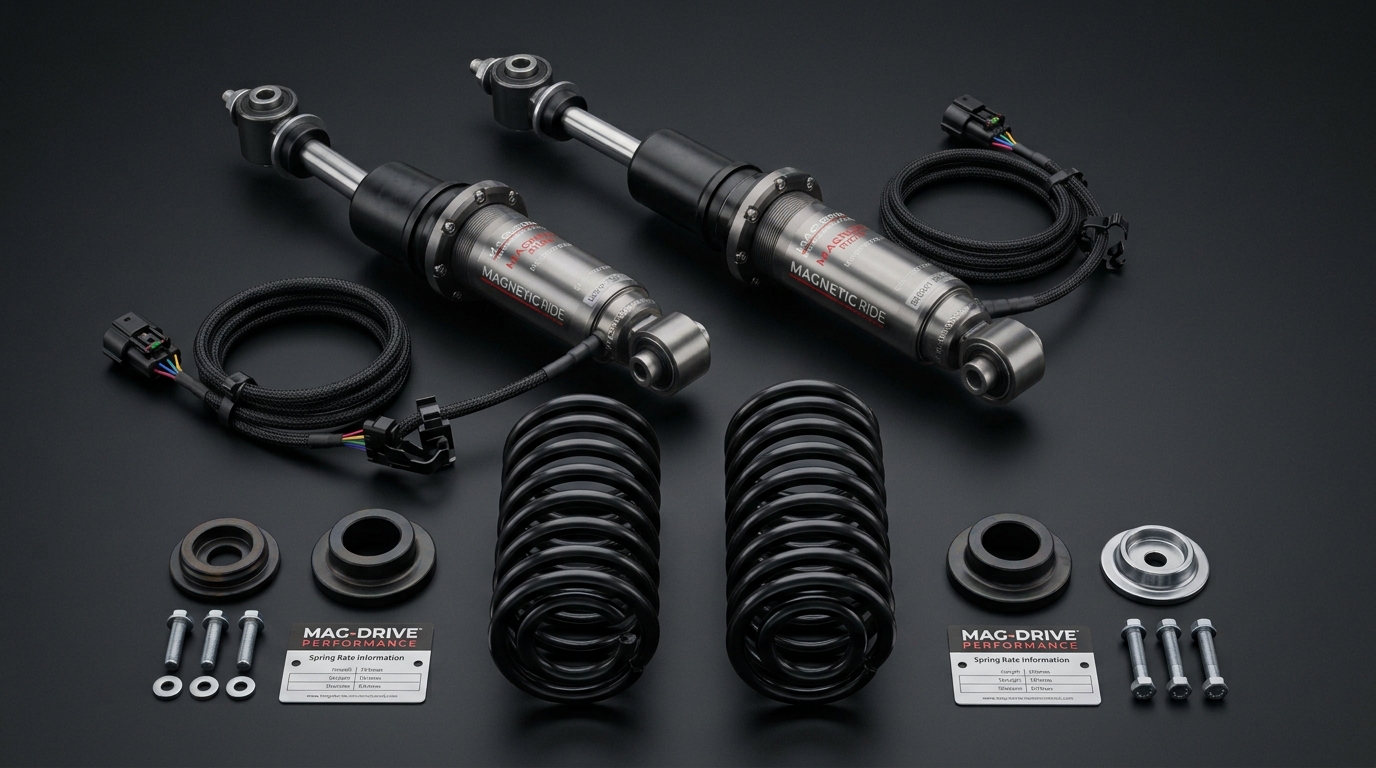
Direct-Fit Electronic Replacement Shocks: Replaces faulty units with direct-fit electronic shocks. This preserves your factory adaptive driving modes, requires no vehicle programming, and automatically clears active DTCs.
-
Passive Conversion Kits: If you prefer to eliminate electronic dampeners on older models, install a passive conversion kit along with resistor bypass modules to clear chassis codes permanently.
Conclusion
Ignoring a "Service Suspension System" light or stored DTCs can lead to uneven tire wear, unstable emergency braking, and premature air compressor burnouts. Diagnosing active chassis codes early saves thousands in secondary repairs.
Restore Your Ride Quality Today
Browse Luft Meister Direct-Fit GM Magnetic & Air Suspension Parts—engineered for exact OEM plug-and-play fitment, active DTC elimination, and long-lasting durability.